
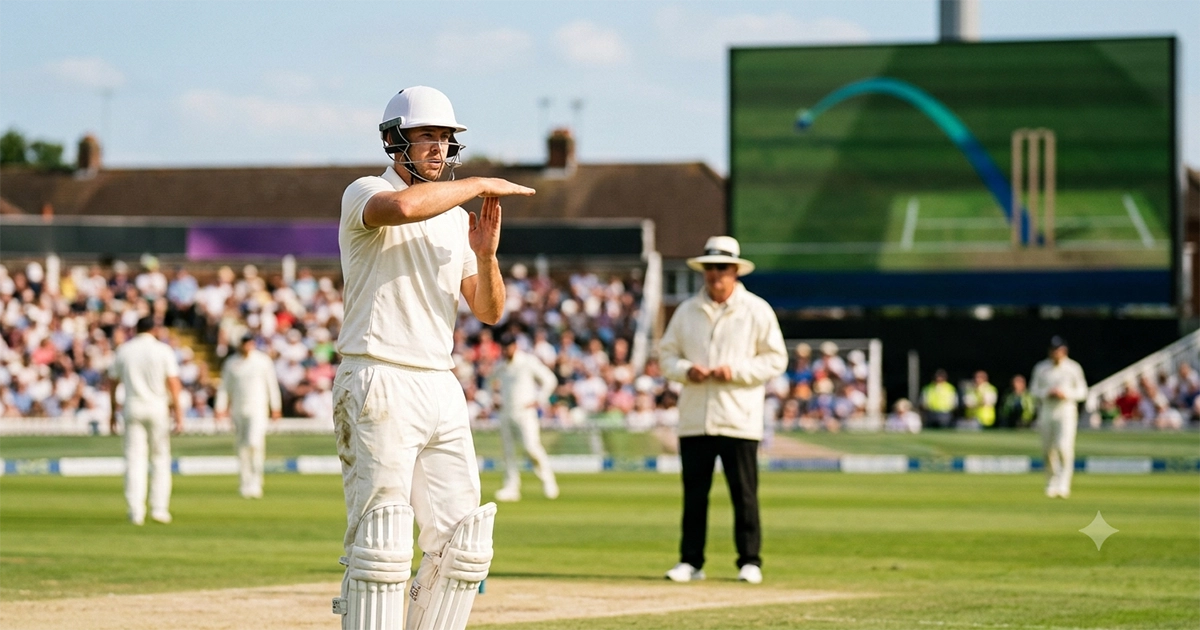
What is DRS in cricket?
Quick clarification before anything else: if you've come from our F1 coverage, this isn't that DRS. Formula 1's version reduces drag on the straights — cricket's is something else entirely: the Decision Review System, used to challenge an umpire's call. Here's exactly how it works.
What does DRS actually let teams do?
DRS allows a team to challenge an on-field umpire's decision and have it checked by a third umpire using technology. The fielding team can challenge a "not out" call; the batter who's just been given out can challenge that dismissal. Either way, the challenge has to be signalled within 15 seconds by forming a "T" shape with the arms — for the fielding side, only the captain can make that call.
What technology does the third umpire use?
How many reviews does each team get?
A review only counts against that total if it's unsuccessful — overturn the original decision, and the team keeps their review for later in the innings.
What is "Umpire's Call"?
This is the part that confuses newcomers most. When ball-tracking shows a marginal result — the ball only just clipping the stumps, or the point of impact right on the edge of the danger zone — the on-field umpire's original decision stands. The technology has a small margin of error, so genuinely borderline calls default back to the human decision on the field.
Example: A batter is given out LBW on the field. On review, ball-tracking shows the ball would have hit the stumps, but only just — less than half the ball clipping them. That's Umpire's Call: the batter stays out, because that was the original decision, but crucially the team that reviewed it doesn't lose their review.
That last point trips a lot of people up: Umpire's Call isn't a loss for the reviewing team in the way a fully wrong review is. The original decision simply stands, and the review itself is refunded — the system treats a marginal call as inconclusive rather than a failed challenge.
Why DRS still causes arguments
Even with cameras, microphones, and infrared imaging, cricket still leans on human judgement for the trickiest calls — particularly LBW, where the technology is predicting what would have happened rather than showing what did. If you want the full detail on how that decision gets made in the first place, we've covered it separately in our LBW explainer.
Quick note if you've landed here from our F1 coverage instead: this isn't that DRS. Formula 1's Drag Reduction System was actually retired for the 2026 season — we've explained what replaced it in our F1 explainer.
Follow every review of the summer's Test cricket — open Watchsport
Open Watchsport →