
What happened to DRS in F1?
If you've been watching this season wondering why nobody's mentioned DRS, you're not missing anything — it's genuinely gone. Formula 1 retired it for 2026, replacing it with a system that works quite differently. Here's what's actually happening on the straights now.
Why did DRS disappear?
For over a decade, DRS worked in a simple way: a driver within one second of the car ahead could open a flap in their rear wing inside a designated zone, cutting drag and gaining a temporary speed boost to help them pass. It only worked for the chasing car — nobody else got the advantage.
The 2026 regulations introduced full-time movable front and rear wings for every car, on every straight, regardless of whether anyone's being chased. Once every driver has access to that kind of drag reduction all the time, a system that only helped the car behind stops making sense — so DRS was retired rather than adapted.
What's replaced it?
How Active Aerodynamics works
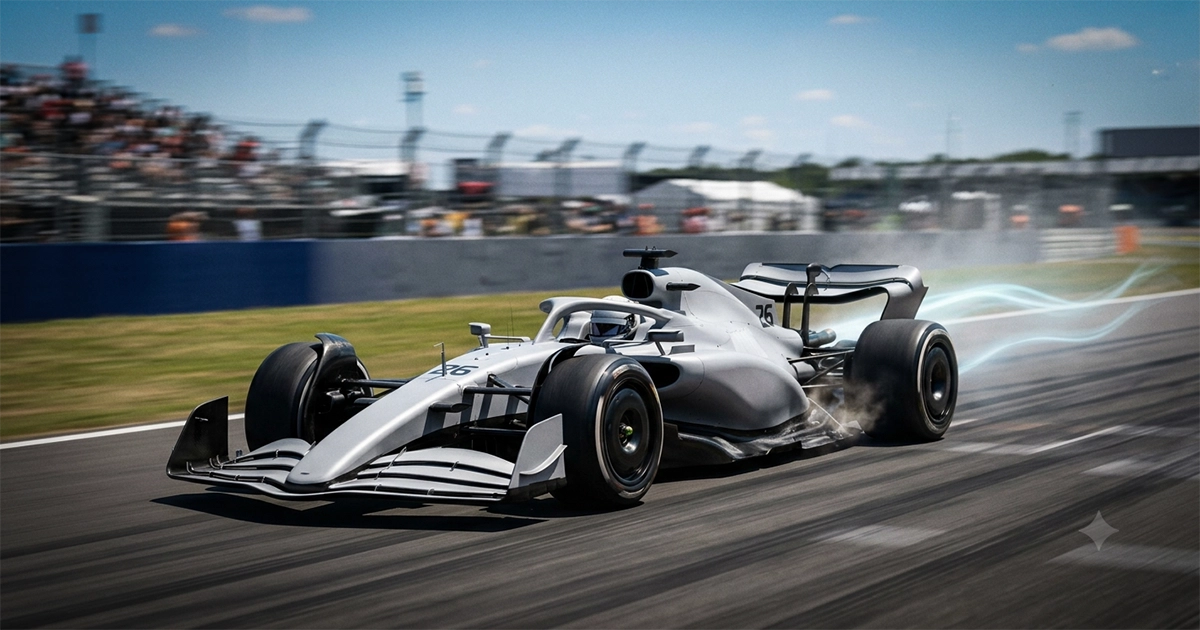
Every car's wings now switch between two settings. In Corner Mode, the wings sit in their standard position, generating maximum downforce for grip through bends. In Straight Mode, the wings rotate to a low-drag position, increasing top speed — and every car on the straight can use it, not just whoever's in second place.
How Overtake Mode works
This is where the old DRS proximity rule survives. A driver within one second of the car ahead can activate Overtake Mode to draw extra electrical power from their car's hybrid system, giving them a genuine speed advantage for a short period. Unlike DRS, which was locked to a fixed zone, Overtake Mode can be used strategically — all at once for a decisive move, or spread out across a lap.
The key difference: under DRS, only the chasing car got a speed boost, and only in one specific stretch of track. Under the 2026 rules, every car gets the aerodynamic boost on every straight — the only proximity-gated advantage left is the extra electrical power from Overtake Mode.
The philosophy has shifted, not just the mechanics. DRS gave one driver an edge nobody else had. Active Aero levels that playing field for everyone, and puts the real overtaking advantage back in how well a driver manages their energy deployment — a more strategic battle than a single button press.
One more thing — the other DRS
If you've landed here from our cricket coverage looking confused, you're in the right place for the wrong sport. Cricket's DRS — the Decision Review System — is a completely different thing, and very much still in use. We've explained that one separately in our cricket DRS explainer.
Follow every session of the 2026 season — open Watchsport
Open Watchsport →