
What is LBW in cricket?
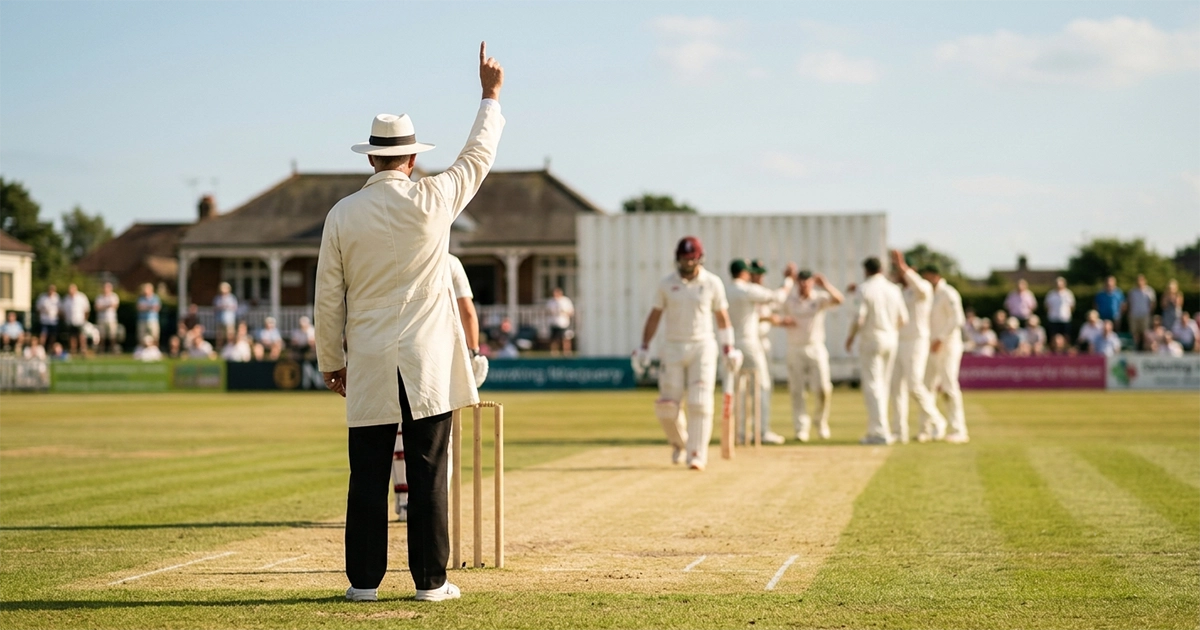
The bowler appeals, the umpire pauses, then a finger slowly rises — or doesn't. Few moments in cricket carry that much silence and tension packed into two or three seconds.
The basic idea
LBW stands for "leg before wicket." In cricket, a bowler is trying to hit a set of three wooden stumps behind the batter with the ball. Normally, the batter defends the stumps with their bat. LBW exists to stop batters using their body — usually their leg — to block the ball instead.
In simple terms: if the ball hits the batter's body rather than their bat, and the umpire judges it would have gone on to hit the stumps, the batter can be given out.
What actually has to be true?
It's not quite as simple as "ball hits leg, batter's out." The umpire has to work through several conditions, all within a couple of seconds, before raising the finger:
The "playing a shot" exception
There's one important twist to condition four. If the batter genuinely attempted to play a shot with the bat and missed, they can only be given out if the ball struck them in line with the stumps. But if the batter made no attempt to play a shot at all — simply blocking the ball with their pad — they can still be given out even if the impact was outside off stump.
Example: A batter thrusts their pad forward to block a ball without offering a shot, and it strikes them well outside off stump. Because they made no genuine attempt to play it, they can still be given out — a decision that often looks harsh to newcomers, but is exactly what the law is designed to catch.
This rule exists specifically to stop batters using their pads as a second bat. Without it, a batter could simply block every ball heading for the stumps with their leg and never risk being dismissed.
Why umpires get overturned so often
A delivery can arrive at well over 80mph, and the umpire has perhaps half a second to weigh up line, height, and trajectory, then project where the ball would have ended up if the batter's pad hadn't been there. Nobody, however experienced, gets that right every single time under those conditions. That's exactly why LBW is among the most reviewed decisions in the sport — teams can challenge the on-field call using ball-tracking technology, which we've covered separately in our DRS explainer.
Follow every ball of the summer's Test cricket — open Watchsport
Open Watchsport →