
F1 penalties explained: track limits, grid drops, and disqualification
Why did that driver just get five seconds added to their time? Why is someone starting from the back despite qualifying third? F1's penalty system looks chaotic from the sofa, but it's built on a fairly consistent set of rules — here's how it actually works.
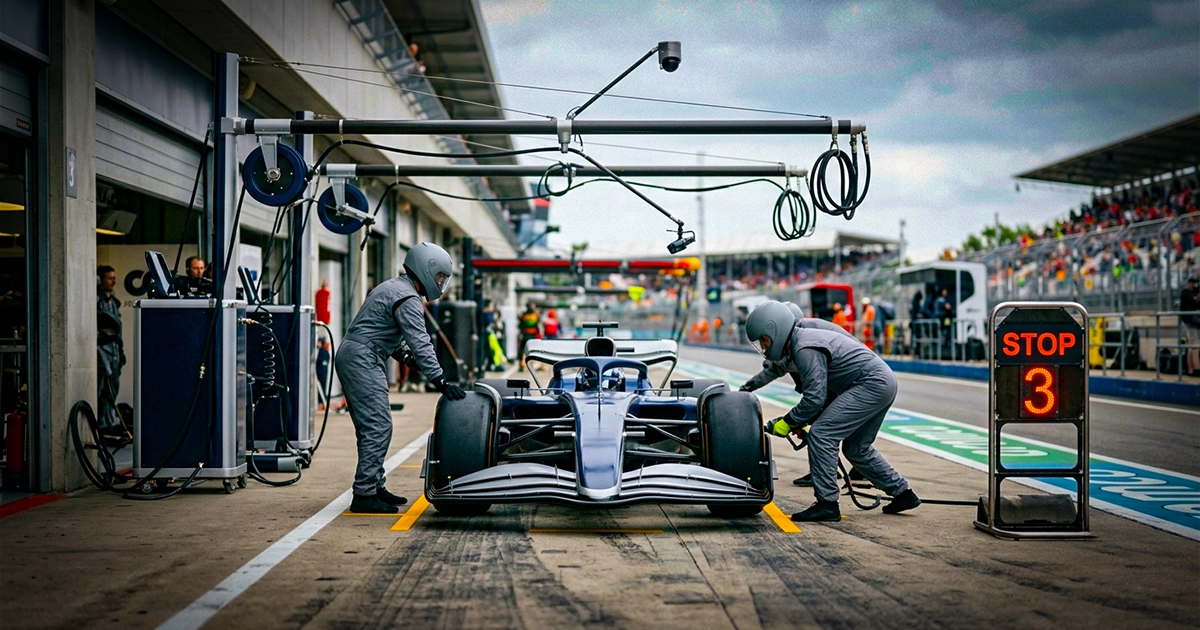
Pit lane speeding
Every circuit sets a maximum pit lane speed limit — usually around 60–80km/h depending on the track — enforced for the safety of mechanics working in a tight space. Exceed it, even briefly, and it's picked up automatically by transponders in the driver's car. There's no discretion involved: go over the limit and a penalty follows.
Track limits
A car is considered to have left the track if all four wheels cross the white line marking the circuit's edge. Do this while gaining a lasting advantage — typically cutting a corner to carry more speed — and the driver's lap time for that lap gets deleted, which matters hugely in qualifying, where a single lap can decide a grid position.
Track limits breaches during a race are usually punished differently to qualifying: rather than deleting a lap time, race control typically orders the driver to give the position back, or issues a time penalty if the advantage wasn't handed back voluntarily.
Racing standards and causing a collision
Stewards judge on-track incidents — forcing another driver off the track, an unsafe rejoin, causing a collision — against a written set of driving standards guidelines. It's not a purely subjective call: the guidelines set out expectations for things like how much of a car needs to be alongside another before it's entitled to racing room into a corner.
Common penalty types
When a grid penalty is too severe to apply
Grid penalties for things like an unscheduled engine component change can stack up to a genuinely enormous number of places — more than there are cars on the grid. When that happens, the driver simply starts from the back, and any leftover penalty that couldn't be applied carries forward to their next race weekend instead.
Parc fermé: once qualifying ends, cars are held in a strictly controlled state called parc fermé, and teams are barred from making significant setup changes before the race. Breach that rule — even accidentally — and the usual penalty is starting from the pit lane rather than a straightforward grid drop.
Disqualification after the chequered flag
Occasionally a driver crosses the line, celebrates a result, and is disqualified hours later. This happens when post-race scrutineering finds a technical breach — a fuel sample outside the permitted specification, or a skid block worn beyond the legal limit from riding too low to the ground. These checks happen after every session, which is why results are always described as provisional until scrutineering is complete.
Never miss a Grand Prix — follow every F1 session on Watchsport
Open Watchsport →For more on how a race can be stopped altogether, see our guide to F1 flags and the Safety Car. And if you're wondering why every driver has to pit at least once, check out our tyre compounds explainer.