
F1 tyre compounds explained: hard, medium, soft, and the mandatory two-compound rule
Hard, medium, soft, C1 to C5 — F1's tyre jargon can feel like its own language. Here's what the compounds actually mean, why teams pick different ones, and why every driver has to change tyres at least once.
The five dry compounds
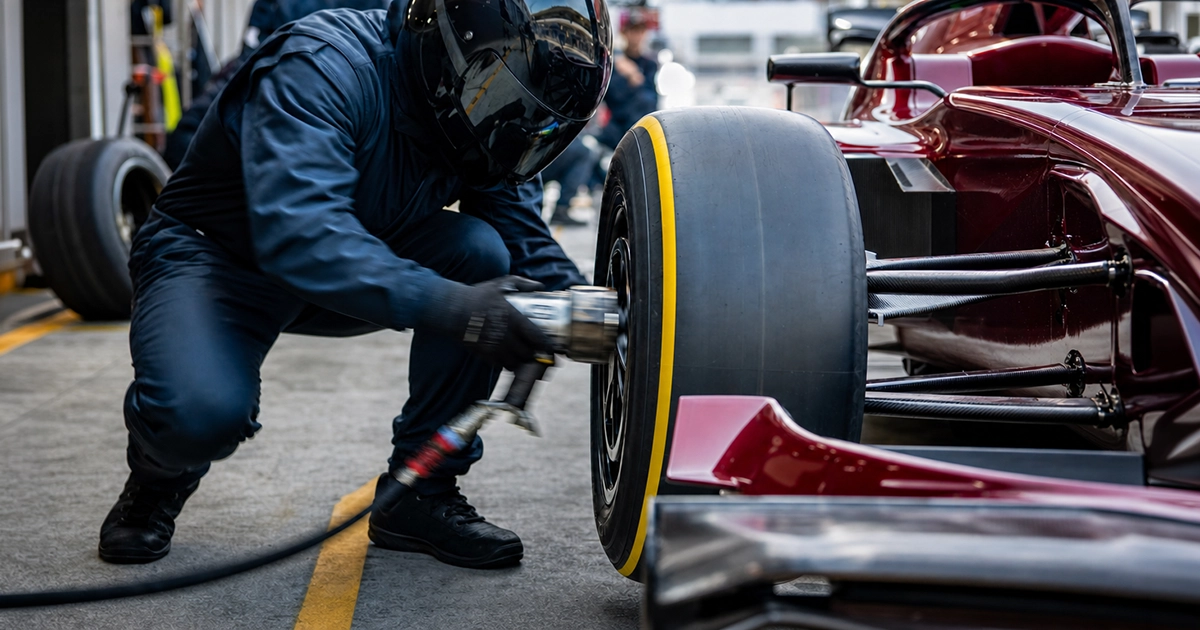
Pirelli names its dry-weather tyres C1 to C5 — the “C” simply stands for compound. C1 is the hardest, C5 the softest, with a clear step in grip and durability between each one. Harder compounds last longer but generate less grip; softer compounds are faster over a single lap but wear out sooner. On screen, they're colour-coded so you can tell them apart at a glance:
Pirelli doesn't bring all five compounds to every race. They select three from the C1–C5 range for each weekend based on the circuit — a smooth, low-wear track like Barcelona might see the harder end of the range (C1, C2, C3), while a bumpier street circuit might get C3, C4, C5.
Here's the part that trips people up: Hard, Medium, and Soft aren't fixed to specific compounds — they're relative to whatever three get chosen that weekend. C3 might be labelled the Hard tyre at a soft-compound weekend, but the Soft tyre somewhere else entirely. The colour on the sidewall always tells you its role for that race; the C-number underneath is what actually tells you the compound.
New for 2026: Pirelli has dropped back to five dry compounds (C1–C5) after briefly running six (C1–C6) in 2025. The extra C6 compound was pulled because it proved too close in lap time to C5 to offer teams a genuinely different strategic option.
Wet-weather tyres
Separate from the dry range, there are two wet-weather options, used whenever the track is too damp for slicks:
The mandatory two-compound rule
Cars must use at least two different dry compounds during a race, unless intermediate or wet tyres were used at some point — which is why, in a dry race, every driver has to pit at least once. It's a deliberate rule to force variety into race strategy rather than let everyone run one tyre start to finish.
Why it matters for strategy: starting on the softer compound can mean an early pace advantage but an earlier pit stop; starting on the harder compound trades early pace for a longer first stint. Different teams calculate this differently depending on track position, weather, and how their car treats its tyres — which is why identical starting grids can still produce very different race strategies.
Monaco briefly had its own extra rule in 2025, forcing a mandatory third tyre set to encourage more pit stops on a track where overtaking is notoriously difficult. It didn't have the intended effect and has been scrapped for 2026 — Monaco now follows the standard two-compound rule like every other race.
Tyres and the rest of the race
Tyre strategy rarely plays out in isolation. A well-timed Safety Car can completely reshape a team's tyre plan — suddenly a pit stop that would have cost 20 seconds in clear air costs almost nothing, and teams who were planning to stop later will often dive in early to take advantage. That's part of why identical tyre strategies on paper can produce very different results once a race actually gets underway.
Watching live is the easiest way to see all of this in action — tyre choices, pit windows, and Safety Car reactions unfolding together. The British Grand Prix at Silverstone is a good place to see UK teams and drivers manage exactly this kind of strategy on home soil.
Catch every session — follow F1 on Watchsport
Open Watchsport →