
What do the flags mean in F1? Yellow, red, and the Safety Car explained
A race suddenly slows down, drivers start weaving, and the broadcast cuts to a marshal waving something coloured. Here's what every flag in F1 actually means, and what happens when a race gets stopped altogether.
The caution flags — yellow and double yellow
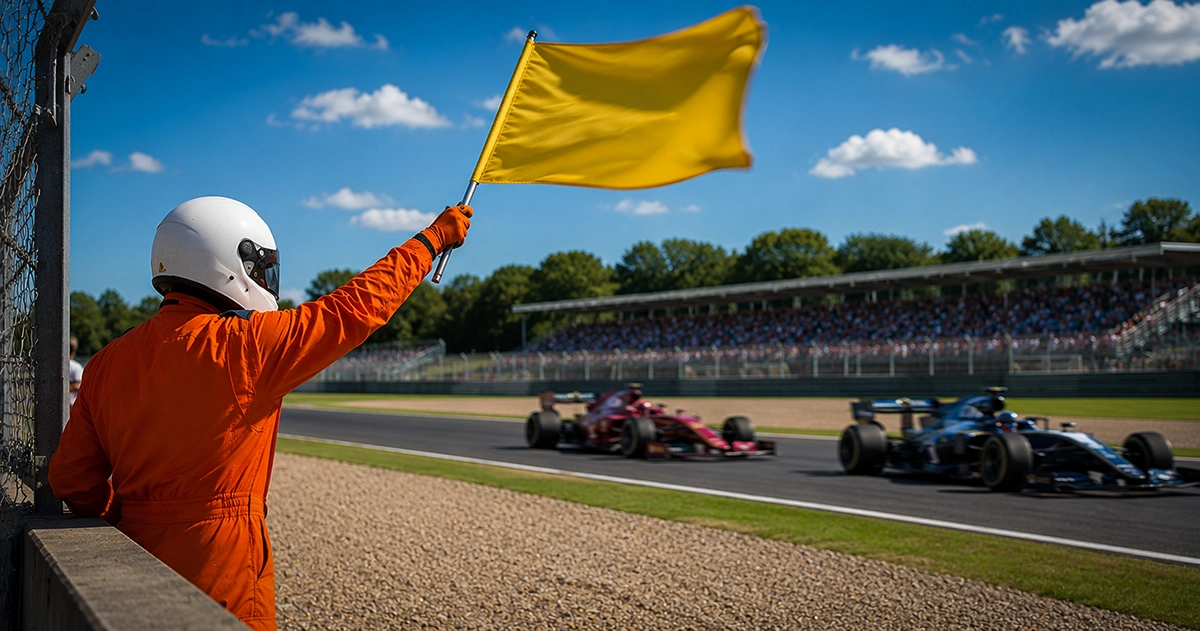
A single waved yellow flag means danger ahead on that section of track — usually a stranded car or debris. Overtaking is banned in that zone and drivers are expected to slow down and be ready to change direction.
Red flag — the session is stopped
A red flag halts the session completely, usually for a heavy crash, dangerous conditions, or a blockage that can't be cleared safely under yellow flags alone. Cars return to the pits or grid and wait for the all-clear.
How the race restarts depends on the circumstances: a standing start from the grid if it happens early on, or a rolling restart behind the Safety Car if there isn't enough time or track damage is limited later in the race. Race control makes that call, not the teams.
New for 2026: the FIA has tightened up exactly when a red flag officially takes effect for lap-time purposes. Any lap completed after the red flag is first shown doesn't count, based on the official timing system rather than what a driver sees or hears — closing a grey area that caused confusion in a qualifying session during 2025.
Safety Car vs Virtual Safety Car
Both exist to slow the field down without stopping the session outright, but they work differently.
Other flags worth knowing
A few more you'll spot during a broadcast: blue flags tell a slower car it's about to be lapped and must let the leader through; black and white (diagonal) is a warning for unsporting driving; a black flag disqualifies a driver from the session; and the chequered flag, obviously, ends it.
How drivers actually see the flags
Marshal posts around the circuit still wave physical flags, but modern F1 cars also display flag status directly on the steering wheel, so a driver doesn't have to spot a marshal in poor visibility or at high speed. Race control triggers the same signal across trackside light panels and every car's dashboard simultaneously, which is part of why the 2026 timing clarification above matters — the electronic signal, not a driver's own view of a marshal's flag, is what officially counts.
Why a Safety Car can change the whole race
Beyond the safety side, a Safety Car period is one of the biggest strategic moments in a Grand Prix. Because the whole field is running at reduced speed and bunched together, teams can bring their driver in for a pit stop and lose far less time relative to their rivals than they would under normal racing conditions — a stop that might cost 20 seconds in clear air can cost almost nothing under a Safety Car. That's why you'll often see several cars dive into the pits within a lap or two of one appearing, and why the timing of a Safety Car can hand an advantage to whichever team reacts fastest.
Never miss a Grand Prix weekend — follow every session on Watchsport
Open Watchsport →