
How does the offside rule work in football?
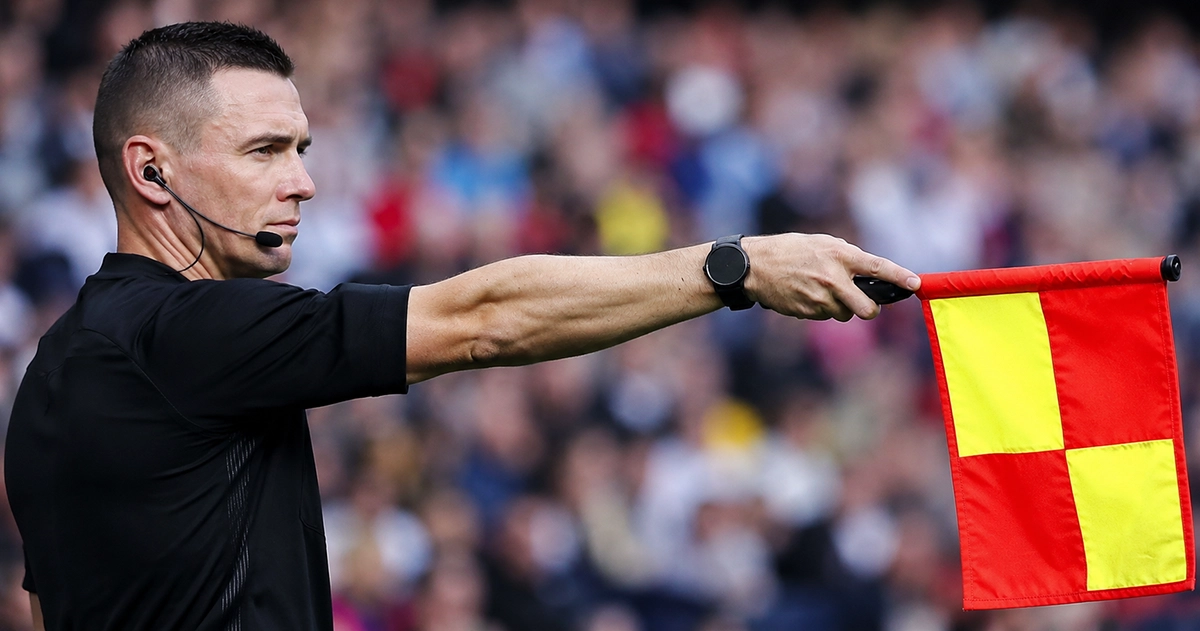
The flag goes up, the striker's arms go out, and half the stadium isn't sure why. No single rule in football gets replayed, argued over, and picked apart on slow-motion replay more than this one.
The basic rule
A player is in an offside position if, at the moment the ball is played to them by a teammate, they're nearer to the opponent's goal line than both the ball and the second-last opponent — usually the last outfield defender, since the goalkeeper is normally the last one.
Being in an offside position isn't an offence on its own. The player only gets penalised if they're also judged to be "involved in active play" the moment the ball arrives.
When is a player not offside?
Example: A winger starts a run level with the last defender, then sprints beyond them just as the pass is played. Because they were level — not ahead — at the exact moment the ball left their teammate's foot, the goal stands.
What about hands and arms?
Only the body parts a player could legally use to play the ball count towards offside — the same zone used for the handball rule. Torso, thighs, feet, and head all count. Hands and arms don't.
Example: A striker's outstretched arm is a yard ahead of the last defender, but their chest and feet are level. Since only the arm is ahead — and an arm can't legally score a goal — the striker is onside.
It's a fine distinction, but an important one. Semi-automated tracking has made this far more reliable, since it can separate a player's playable body from an outstretched limb in a way the human eye often can't at full speed.
What does "interfering with play" actually mean?
This is the part that trips up the offside law more than any other single clause. A player in an offside position is only penalised if they do one of three things:
A player can stand in an offside position all match without being flagged — if the ball never comes to them and they don't interfere with a defender, there's simply no offence to give.
Why technology got involved at all
On paper, the rule is precise to the centimetre. In practice, an assistant referee is judging the exact moment a ball leaves someone's foot against a defensive line moving at full sprint, from one fixed position on the touchline — and limbs don't all arrive at the same point at the same time. That gap between a precise law and an imperfect view of it is exactly why VAR now reviews offside decisions using frame-by-frame footage and tracking data most assistants could only dream of. If you're curious how that technology actually works, we've covered it in our VAR explainer.
Never miss a big offside call — follow every match on Watchsport
Open Watchsport →