
The Champions League anthem: composer, inspiration, and why players love it
Every Champions League night starts the same way: two teams lined up in the tunnel, and three minutes of orchestral music that’s reduced grown professional footballers to tears. It was written in a few weeks by a composer from Croydon, working mostly in TV jingles at the time, and borrowed heavily from a 300-year-old coronation anthem.
A tournament in need of a rebrand
In the summer of 1992, European football had an image problem. Hooliganism had dogged the game through the 1980s, and the old European Cup — despite Barcelona having just lifted it at Wembley — was seen by UEFA as a tired, uninspiring format in need of a relaunch. We’ve told the full story of that rebrand, and the competition’s history before it, in our piece on how the European Cup became the Champions League.
“It was about restoring a bit of beauty back to the beautiful game.”
Tony Britten, composer · Betway Insider interviewAround the same time, the 1990 World Cup in Italy had introduced football audiences to the Three Tenors, and classical music was suddenly box office. UEFA wanted their new Champions League to feel like the best of football rather than the worst of it, and decided the competition needed an anthem to match. The job went to Tony Britten, a composer from Croydon who was, by his own account, mostly writing jingles for TV adverts at the time. Given how little direction UEFA had to offer beyond wanting something “anthemic”, Britten put together a playlist of classic pieces to help the organisation settle on a direction — and one piece kept winning out.
Borrowed from a coronation
That piece was Handel’s Zadok the Priest, one of four anthems the composer wrote for the coronation of King George II in 1727 and a piece that’s been performed at every British coronation since. Britten built his composition around Handel’s rising string opening, then wrote the rest of the melody himself. He’s been fairly blunt about the split over the years: only the opening phrase is Handel’s, and everything else is his own work.
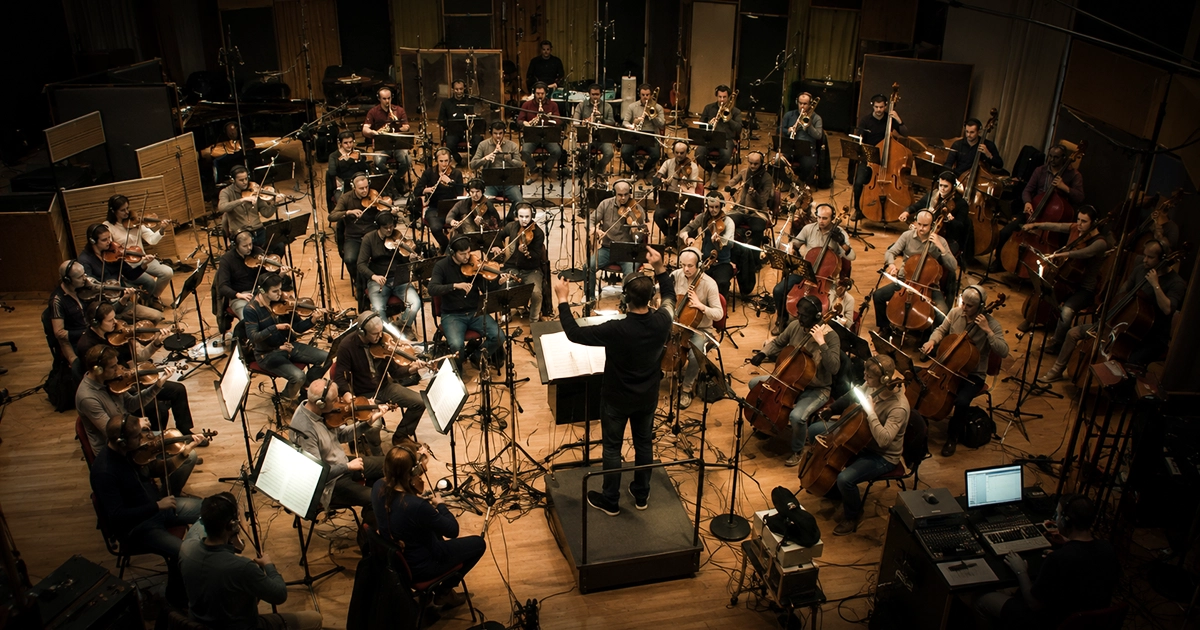
The recording itself was a genuinely grand production for what was, at the time, just another commission. Britten booked the Royal Philharmonic Orchestra and the choir of the Academy of St Martin in the Fields, recording at a studio in Islington. UEFA also insisted on something unusual for a football anthem: lyrics in all three of the organisation’s official languages — English, German and French — sung simultaneously rather than in separate versions.
The words themselves came almost as an afterthought. With no brief on what the anthem should actually say, Britten has explained that he built the lyrics around a handful of simple superlatives — the biggest, the best, the champions — translated across the three languages so any fan in any UEFA country would recognise a word or two.
What it means to the players
A piece of music commissioned in a few weeks for a rebranding exercise has come to mean something genuine to the players who hear it before kick-off. At the 2024/25 league phase draw, Cristiano Ronaldo was characteristically blunt about its effect on him.
“When you listen to the Champions League music, it turns you on.”
Cristiano Ronaldo · 2024/25 league phase drawFrancesco Totti was visibly moved to tears by it when Roma returned to the competition for the 2014/15 season after a four-year absence, and UEFA has since made that emotional pull official, producing a video series called “What the Anthem Means to Me” featuring players including Zinedine Zidane. Zlatan Ibrahimović has referenced Tony Britten by name in a UEFA promotional film — unusual recognition for the composer of a tournament’s intro music.
Some of that is conditioning: three decades of hearing it before the biggest nights of their careers ties the anthem directly to the occasion. But the piece is also genuinely built for the job — the choral swell and Handel’s rising strings build tension the way a stadium does in the minutes before kick-off.
A new recording for a new era
When UEFA overhauled the Champions League format for the 2024/25 season — expanding to a single 36-team league phase — the anthem got a refresh to match. Britten re-recorded it with England’s Tenebrae choir, a group he’s described as among the best in the world, alongside a fresh set of session musicians. The melody and structure remain exactly as they were in 1992; only the recording itself has been modernised. That so little needed to change after more than three decades is arguably the strongest evidence of how right Britten got it the first time.
It’s a reminder that European football’s biggest rebrand happened at almost exactly the same moment as England’s did domestically — UEFA relaunching the European Cup as the Champions League within months of the Premier League breaking away from the Football League. Both decisions were, at their core, about the same thing: making football a more valuable television product. We’ve covered the English side of that story in our piece on the Premier League’s breakaway and the Sky TV years.
Still doing its job
Three decades on, the anthem still plays before every single Champions League match, home and away, group stage to final — a piece of marketing copy that outgrew its brief and became genuinely beloved by the players it was written for.
Every Champions League night, sorted — kick-off times and channels for the whole competition
Open Watchsport →