
EPL evolution: the breakaway and the Sky TV years
Before it was the most-watched league on the planet, English football’s top flight was a handful of terrestrial highlights and a live TV blackout. A boardroom revolt in 1992 changed all of that — and explains why the gap between English and Scottish football now runs into the billions.
The old First Division
Until 1992, England’s top division was the Football League First Division, and live television coverage barely existed. Matches were shown as recorded highlights — Match of the Day on the BBC, or ITV’s regional programming — with the idea of screening a full match live on a Saturday afternoon considered close to sacrilege, thanks to fears it would gut attendances at lower-league games kicking off at the same time. Clubs made their money largely at the turnstile. Television was a Sunday-evening add-on, not a revenue stream.
The breakaway
By the late 1980s, England’s biggest clubs had grown frustrated. Gate receipts and TV money were shared far more evenly across the whole 92-club pyramid than they wanted, and they could see rugby league and American sport starting to cash in on satellite television that English football wasn’t touching. With the Football Association’s backing — keen to weaken the Football League’s authority — the top clubs broke away entirely, forming the FA Premier League ahead of the 1992/93 season.
The Sky deal that changed the game
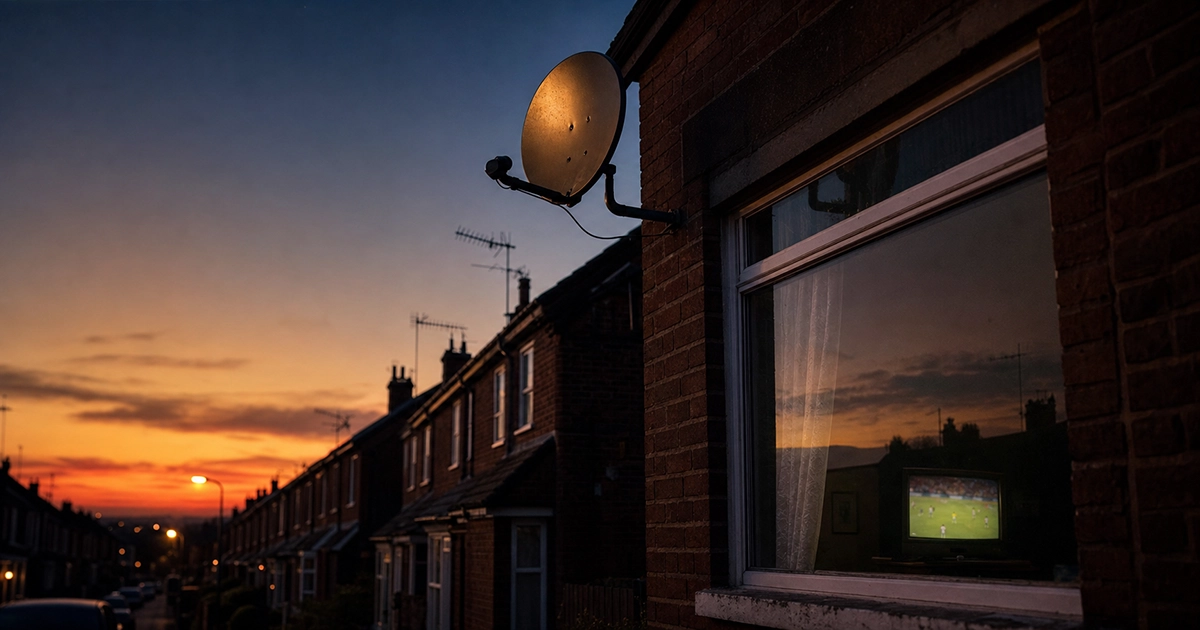
What followed was one of the most consequential television deals in British sporting history. A fledgling BSkyB, still building its subscriber base, outbid ITV for the rights to the new Premier League with a five-year deal worth £304 million — a figure that dwarfed anything English football had seen before. Sky needed live football to sell satellite dishes, and the Premier League needed Sky’s money. Monday Night Football became appointment viewing, and for the first time, fans without a ticket could reliably watch top-flight matches live, week in, week out — provided they paid for the privilege.
Money keeps rising
Once the ceiling was broken, it kept rising. Each successive rights cycle brought a bigger number, and the current 2025–29 domestic deal with Sky Sports and TNT Sports is worth £6.7 billion over four years. International rights now bring in even more than that — led by NBC/Peacock’s dedicated US deal, reportedly worth hundreds of millions of pounds a year on its own. The 3pm Saturday blackout, one of English football’s oldest protections for lower-league attendances, only applies to UK broadcasters; American audiences can watch every single match live, blackout-free, which is one reason the league’s overseas audience now dwarfs its domestic one. That money reshaped the football itself: transfer fees, wages, and the gap between the Premier League and everyone below it all trace back to this single decision to sell rights exclusively rather than share them across the pyramid.
The single biggest legacy of 1992 isn’t just how much football is worth now — it’s that following a full season properly means juggling several subscriptions rather than one, with today’s rights split between Sky Sports, TNT Sports and occasional free-to-air games.
The gap it created — and the European edge it buys
That same TV money explains a lot of why English clubs have dominated recent European competition. When Premier League clubs are competing for players and pushing deep into the Champions League and Europa League, a domestic broadcast deal worth £1.675 billion a year — shared across 20 clubs — gives them financial firepower most European leagues simply can’t match, even before overseas rights are added on top.
Nowhere is that gap starker than close to home. Scotland’s entire top-flight broadcast deal — Sky Sports and Premier Sports combined — brings in roughly £33 million a year, shared across 12 clubs. The Premier League’s domestic deal alone is worth over 50 times that, for a league of similar geography and a fanbase that follows the game just as passionately. Two countries next door to each other, watching football on the same kind of screens, generating wildly different amounts of money from doing it.
Scottish Premiership TV deal (Sky + Premier Sports): £33m per year, 12 clubs
Curious how that plays out closer to home this season? Our Scottish Premiership 2026/27 preview covers what Celtic and Rangers are working with this time round.
European football went through almost exactly the same rebrand at almost exactly the same moment — UEFA relaunched the European Cup as the Champions League within months of the Premier League breaking away. We’ve told that side of the story in our piece on how the European Cup became the Champions League.
Where that leaves fans today
Every Premier League match still airs live somewhere — the difference from 1992 is that “somewhere” now spans three or four separate UK platforms depending on the weekend, plus a genuinely global audience watching on broadcasters most British fans have never heard of. That’s precisely the gap Watchsport exists to close: whichever broadcast region you’re following from — the app covers the UK, US, Ireland, Australia, Canada and UAE — one place to see who’s showing what, without hunting across apps to find your kick-off.
Three decades on from the breakaway, Watchsport does the job of finding it for you
Open Watchsport →