
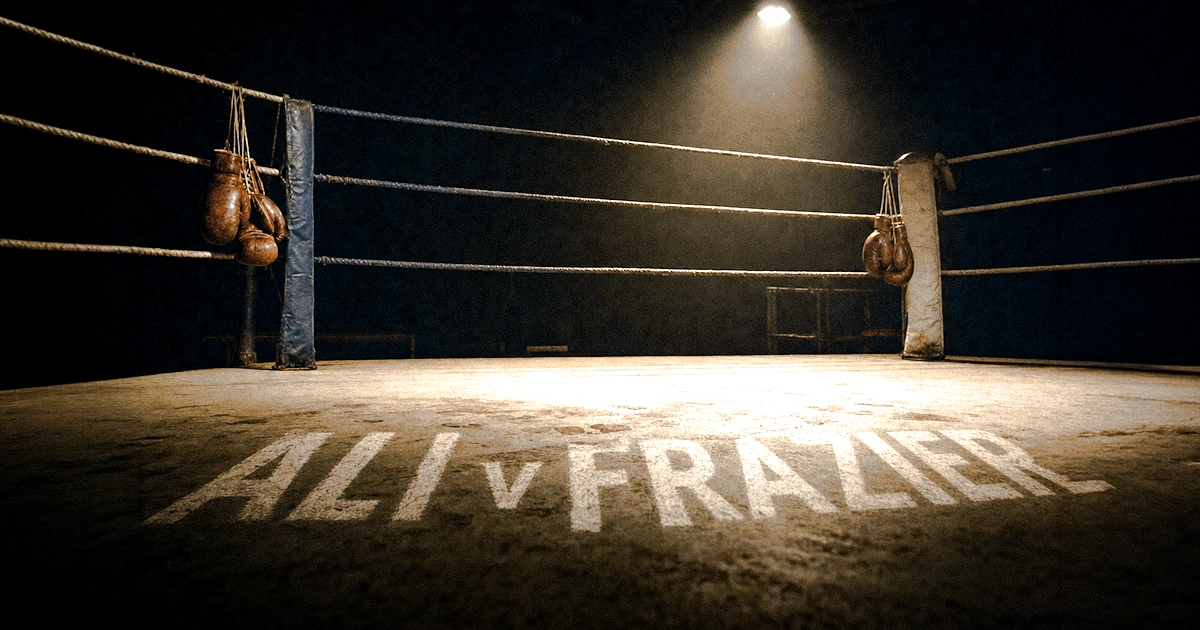
Muhammad Ali v Joe Frazier: the story of boxing's greatest trilogy
No rivalry in boxing history carried the weight of Ali v Frazier. Three fights across four and a half years, each one a genuine heavyweight championship battle, and a personal animosity between the two men that never fully healed. Here's the story of the trilogy that defined an era.
Fight of the Century
By March 1971, both men were undefeated heavyweight champions — Ali still considered by many the rightful title-holder despite being stripped of it in 1967 for refusing the Vietnam War draft, Frazier the man who'd claimed it in his absence. It was the first time two unbeaten fighters had ever met for the heavyweight title, part of why the fight was billed as the Fight of the Century. Their meeting at Madison Square Garden lived up to the name: a gruelling 15-round battle that Frazier won by unanimous decision, dropping Ali with a left hook in the final round for good measure — the first professional defeat of Ali's career.
Super Fight II
Ali spent much of the next three years campaigning for a rematch, needling Frazier relentlessly in public along the way. When the two finally met again, in January 1974, the fight carried no title on the line — Frazier had lost his belt to George Foreman the previous year — but the personal stakes were as high as ever. Ali won a comfortable unanimous decision over 12 rounds, evening the rivalry at a fight apiece.
Thrilla in Manila
The decider, in October 1975, remains one of the most brutal fights in boxing history. Staged in punishing heat in Quezon City, Philippines, both men pushed themselves to total exhaustion over 14 rounds before Frazier's trainer, Eddie Futch, refused to send him out for the 15th — a decision Frazier fought against, but one that almost certainly saved him from serious harm. Ali, similarly spent, later said it was the closest he'd ever come to feeling like he might die in the ring.
Ali coined the fight's name himself, taunting Frazier in the build-up with a rhyme about bringing a "gorilla" to Manila — the kind of psychological needling that defined the entire rivalry, and that Frazier never forgave him for.
Why the rivalry still resonates
Part of what makes Ali v Frazier endure isn't just the quality of the fights, though all three sit near the top of any list of the greatest heavyweight contests ever staged. It's the genuine, unresolved animosity behind them. During Ali's exile from boxing, Frazier had quietly helped him financially and spoken up publicly for his right to fight again — a real act of loyalty from one rival to another. Ali repaid it, once their own rivalry began building, by branding Frazier an "Uncle Tom" in interviews and painting him as slow-witted to help sell tickets. Frazier, by all accounts a proud and sensitive man, never got over it — a tension between real respect and real bitterness that's rare even by boxing's standards.
What happened after Manila
The two men never fought each other again. Ali fought on for several more years, eventually suffering a heavy defeat to Larry Holmes in 1980 that many felt he should never have taken. Frazier and Ali's relationship stayed cold for decades — Ali would still occasionally mock him in interviews long after both men had retired — though the two were photographed together on more amicable terms in later life, including a public appearance side by side in 2002. It was never a full reconciliation, but by the time Frazier died in 2011, the worst of the bitterness between them had at least softened.
Catch the biggest fight nights as they happen — track boxing on Watchsport
Open Watchsport →New to how boxing's actually scored? Our guide to the 10-point must system is a good place to start.