
How is boxing scored? The 10-point must system explained
A fight goes the distance, the ring announcer reaches for the envelope, and suddenly everyone's a critic of the scorecards. Here's what the judges are actually scoring, round by round.
The basics: three judges, ten points
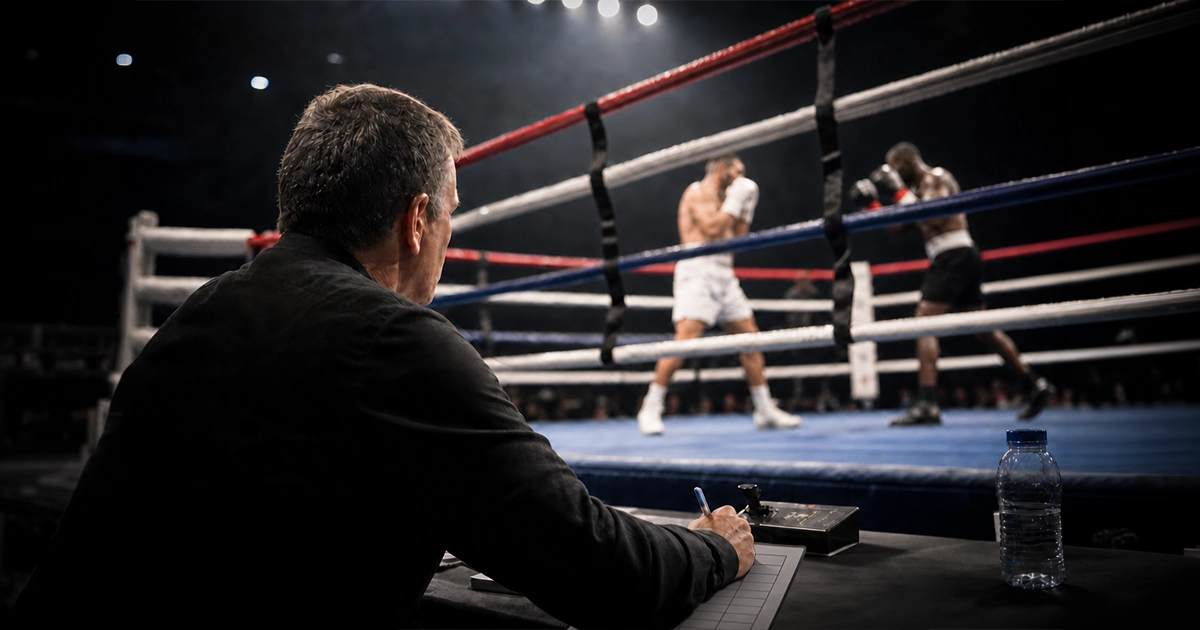
Professional boxing is scored using the 10-Point Must System. Three judges sit at different points around the ring, scoring each round independently — they can't confer with each other during the fight. The name comes from the rule that one fighter must be given 10 points for the round, with the other getting 9 or fewer depending on how it played out.
A perfectly even round can technically be scored 10–10, but judges are actively discouraged from doing this — they're expected to find a winner in almost every round, however close.
What judges are actually looking for
Four criteria decide a round, weighted roughly in this order:
1. Clean, effective punching — the single biggest factor. A handful of hard, accurate shots that land cleanly outweighs a much higher number of punches that get blocked or only partly connect.
2. Effective aggression — forcing the fight and landing while doing it. Simply walking forward without landing doesn't count; it has to actually work.
3. Ring generalship — controlling the pace, distance, and shape of the round.
4. Defence — blocking, slipping, and avoiding punches, weighed alongside everything above rather than as a tiebreaker on its own.
This is also why volume punchers don't automatically win rounds against sharper counter-punchers — judges are trained to reward quality of punches landed over raw quantity thrown.
How a decision is reached
If the fight goes the distance, the three scorecards are added up separately and compared:
Referees can also deduct points independently of the judges' round scoring — typically one point per warning for fouls like low blows or repeated holding. Three warnings in a bout usually means disqualification.
It doesn't always reach the scorecards
All of this only comes into play if the fight actually goes to the judges. A knockout (KO) ends things outright when a fighter can't beat the referee's count. A technical knockout (TKO) is the referee stepping in earlier — because a fighter is taking too much unanswered punishment to continue safely — and can also come from a fighter's own corner throwing in the towel.
Watching Olympic or Commonwealth Games boxing? It's scored differently. Amateur boxing uses five judges instead of three, and losing scores can run from 7 to 9 rather than the pro game's tighter 10–9/10–8 scale — so don't assume a scorecard you're used to from professional fights carries across directly.
Never miss a fight night — follow every card on Watchsport
Open Watchsport →