
Rugby union explained: scrums, lineouts, and how points are scored
Rugby can look like organised chaos if you didn't grow up watching it — scrums collapsing, players lifting each other into the air, and constant stoppages you can't quite explain. Here's the basics, in plain English.
How points are scored
Rugby has four ways to score, and they're worth different amounts — which is why teams sometimes choose to kick for goal rather than chase a try.
The scrum
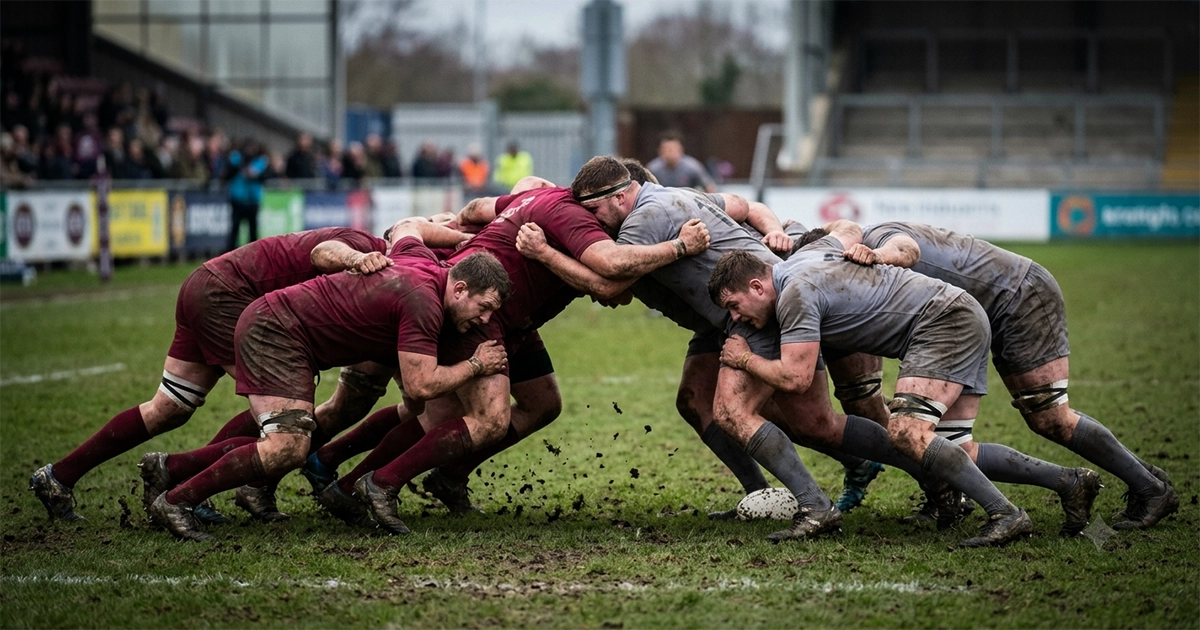
A scrum restarts play after a minor infringement like a knock-on (dropping the ball forward) or a forward pass. Eight forwards from each side bind together and push against the opposing pack, while the scrum-half feeds the ball in for the hooker to strike back with their foot.
Why it looks chaotic: both packs are competing for the same ball the instant it's fed in, so the scrum can shunt forward, backward, or collapse entirely — that's normal, not necessarily a penalty.
The lineout
When the ball goes into touch (off the side of the pitch), play restarts with a lineout. Players from both teams line up in two rows, and the throwing team's hooker throws the ball straight down the middle. Teammates are allowed to lift a jumper to compete for it in the air — one of the few sports where lifting a teammate is not just legal but standard practice.
A few more rules that trip people up
The forward pass rule catches a lot of newcomers out: the ball can only be passed sideways or backwards, never forwards, even though players run forward constantly. At a ruck or maul, an offside line forms behind the last foot of each team, and players must stay behind it until they've joined in properly. And a tackled player must release the ball immediately, giving the other side a genuine chance to contest it.
One rule that helps explain why the referee sometimes lets an obvious infringement play out: advantage. If the non-offending team is already benefiting from an infringement — running into space, say — the referee will hold off blowing the whistle and let play continue rather than stopping the game to reward the team that made the mistake.
Yellow and red cards — the sin bin
Cards work differently to football. A yellow card sends a player to the sin bin for 10 minutes, leaving their team down to 14 players until time's up — it's a genuine, temporary disadvantage rather than just a warning on a piece of paper. A red card removes the player for the rest of the match with no replacement allowed, so the team plays a man short for however long remains. Cards are shown most often for dangerous or reckless tackles, particularly high or no-arms tackles around the head and neck, which rugby's governing bodies have clamped down on heavily in recent years.
Catch every fixture — follow rugby on Watchsport
Open Watchsport →