
What does seeded mean at Wimbledon? How the seedings work
Every year it causes confusion. A player ranked number two in the world is seeded third. A top-ten player misses out on a seeding entirely. Here’s why — and how it all works.
What is a seeding?
A seeding is a ranking system used in a tournament draw to keep the best players apart for as long as possible. At Wimbledon, the top 32 men and top 32 women are seeded, placed in specific sections of the draw so that — in theory — the best players only meet in the later rounds.
The number one seed is placed at the top of the draw, the number two seed at the bottom. Seeds three and four are drawn into the remaining two quarters, and so on down to seed 32.
Why doesn’t Wimbledon just use the world rankings?
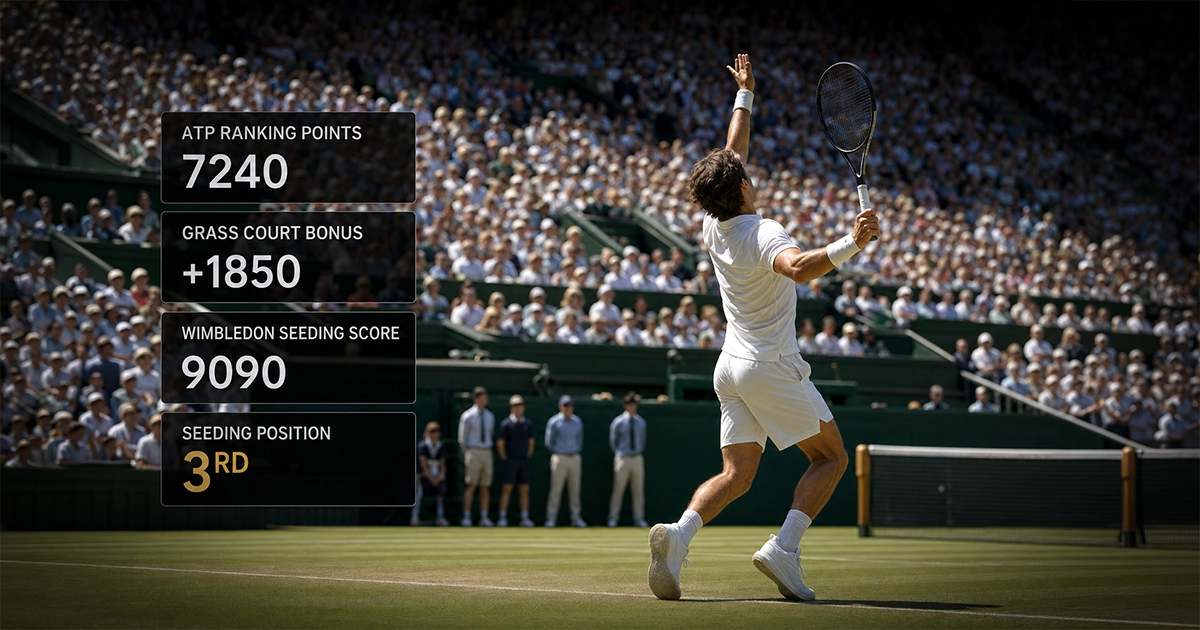
Wimbledon is played on grass — a surface only a handful of tournaments use each year. The ATP and WTA world rankings are calculated across all surfaces, which means a clay-court specialist who dominates the French Open can reach world number one without necessarily being the best grass-court player in the world.
Wimbledon applies its own formula to account for this, modifying rankings based on grass-court performance over the previous 12 months.
What are wildcards?
A wildcard is an entry into the main draw granted outside the normal qualifying process. Wimbledon awards a limited number of wildcards each year — typically around eight per draw — to include players who might not have qualified based on ranking alone.
British wildcards are particularly closely watched. A home player drawn against a top seed in the first round can generate enormous public interest — and occasionally produce a memorable upset.
Why does this matter for watching the tournament?
Understanding the seedings helps you follow the draw intelligently. If the top two seeds are in opposite halves, they can only meet in the final. If a clay-court specialist has been seeded lower than their world ranking suggests, they might face a tougher early draw on a surface that doesn’t suit them.
It also explains why upsets happen. A player seeded 28th on the Wimbledon system might actually be one of the best grass-court players in the world — their ranking just hasn’t caught up. Those are often the most dangerous opponents in the draw.
Follow every Wimbledon match on the Watchsport app
Open Watchsport →